Originally posted on mythicramblings.com on May 28, 2019.
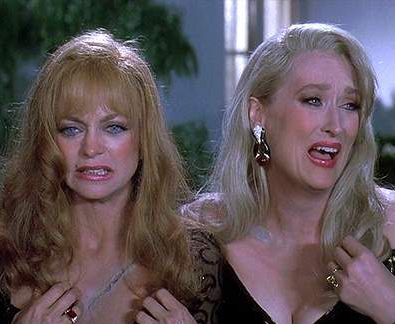
Y’all, why are we so into death now???
I’m a millennial human. Like all humans, I am my own person, with my own hopes and dreams, unable to be placed in any one box. I defy simple definition. I am unique. I am inimitable. I am singular. I am Groot.
As a millennial, I believe in Beyoncé, I eat quinoa, and I joke about how much I want to die.
Okay, MOM, before you freak out, I’ll clarify. It’s not so much about wanting to die. It’s more like…death is inevitable and existence is so painful and wouldn’t each day be better if we never woke up?

I’m being told that my clarification did not actually assuage any fears of suicidal tendencies. Go figure. (BTW, hit up the suicide hotline if this describes you and talk to someone, even it it’s just for 5 minutes.)
All jokes aside, I believe there’s been an uptick in nihilistic humor. But I can’t be sure if I can chock it up to just my generation and our macabre sense of humor.
Nihilism is a trademark of the millennial generation, but it seems to branch out farther than that. Tide Pod memes, for instance, weren’t perpetrated by millennials alone. Our younger betters, the Gen Z saviors, were also responsible for the popularity of Tide Pod Challenge. But sure, let’s blame millennials for that too.

Now, just to be clear, there were actually very few reported cases of people actually eating Tide Pods. They just dared to, playing into the hype of the mass culture. If you want to read more about the Tide Pod meme and millennial nihilism, check out this awesome article on Salon. TLDR; it’s Dadaism. Tide Pod Challenge = Art!!
Regardless of the fact that millennials are typecasted as nihilistic self-entitled adult-children hybrids, and that this is apparently a “bad thing” (idgi), I know it’s not just us millennials. Television is meeting that nihilism head on with alarming aplomb and agreement.
Over the past couple of years, there have been a few shows that are just plain happy to deal with the death. You’d think that’d be a bit of niche genre, but it’s grown into a robust lineup.

There’s The Good Place, one of my favorite shows out right now. Eleanor Shellstrop finds herself in the afterlife and reassured that she’s in the “good place” (as opposed to you know, the “bad place”). The thing is, Eleanor was kind of a shit person back on Earth and suspects that she has ended up in the Good Place by accident. Of course, being the shit person that she is, she decides to hide her immoral past. But maybe she can learn to be a better person?
What’s not to like?!

No, I’m being honest, what’s not to like? You got a little bit of ethics, a little bit of philosophy, and a lot of bit wonderful actors with hilarious jokes. As someone who lived for 3 years in Jacksonville, Florida, I really appreciate one character a lot.

Then there’s this year’s Forever, with Fred Armisen and Maya Rudolph. Those names alone should send you off to Amazon Prime to watch all 8 episodes. Forever is unflinching and yet oh-so delicate in its fatally humourous look at marriage and commitment.

(Baby don’t hurt me….)
And lastly there’s Miracle Workers, a new limited series that finds Daniel Radcliffe as an overworked and unsupported minor angel to Steve Buscemi’s God. Basic premise, God’s kinda over humans and decides to end Earth. A show exploring hope and existential doom, it only makes sense that its only season aired on TBS.

We can’t forget Russian Doll, this winter’s runaway hit that inspired approximately 3 haircuts on my Instagram feed. Death becomes a tired gag for Natasha Lyonne’s character as she dies and dies and dies again. There are smart connections drawn between trauma and living, giving new meaning to the phrase “death by a thousand cuts.” (I think the theme song was definitely 900 of those killing cuts.)

The Leftovers and After Life also deal with life-after-death, but in a different way from those listed above. These two focus on those left behind, exploring stages and expressions of grief as well as what it means to believe. Those are both closely linked to death, but not in the same vein as the others.
And what about cult favorites like Six Feet Under and Dead Like Me? Released in 2001 and 2003 respectively, many will tell you that these shows were ahead of their time. Those people will read the first part of this and tell you that mass audiences weren’t ready, but now because we’re all millennials and the economy is fucked and the housing market is fucked and the planet is fucked. and…because everything feels like the world is ending and only because of that are we finally ready for shows to deal with death.
Well, sorry to be a Douglas Downer (why do women gotta be the negative ones?), but I’m gonna stop them right there and say “you’re wrong”. It’s not that we as a culture are finally ready to talk about death. It’s just that now a lot of our former methods of coping with the big unknown chapter that is death aren’t really working.

Before modern religion, we had mythology. Ancient mythology, less ancient mythology, pretty recent mythology – hell, all mythologies are in large part developed to help us mere mortals deal with the afterlife. What comes next? What from this world matters for the next? All of it? None of it?
The whole idea of death and how to prepare for it is an entire subsection of mythology. The biggest theme is around what I call the 3 Rs (a real thing I didn’t just make up now). The 3 Rs (rebirth, resurrection, reincarnation) inspire hope and relieve lot of anxiety by saying, “it’s okay, you’re not really dead!” Some of the many examples include:
- Norse mythology (Ragnarok is the end of the world, but it’s also actually a chance for the world to begin anew)
- Buddhism (look, you’re a bird, now you’re a plane, now you’re SUPERMAN!)
- Arthurian legends (hello, King Arthur, the once-and-future king)
- Christianity (nice to see you again, Jesus)
- Yoruban mythology (you get to come back as your descendent!)

We also have the idea of rewards in the afterlife. Again, all the usual suspects from above (plus more!) tell us that specific actions in life will yield certain results. The logic extension of rewards is punishments. Go against certain random sociological rules we all agreed to, then you’re in deep shit. Here are a bunch of stories warning you. And that, children, is how you get yer basic mythology.
And then there are mythologies that treat the afterlife as just a thing, neither good nor bad. Some notable examples are Yoruban, Greek, and Mayan mythologies. They each feature the afterlife as an alternate plane of existence that lives next to this world. Travel between the two is completely possible. While Yoruban and Greek mythology still maintain some idea of different standards based on your actions, the differences are not quite the dichotomy mentioned above. Xibalba, the city of the dead in Mayan mythology, may be home to Pus Demon and Sweeping Demon (among others) and plenty of deadly traps, but it also has a ballgame so that’s fun!

Most famously, the Eleusinian Mysteries were a great big pan-Hellenic festival preparing people for death. The many festivals drew people all over ancient Greece for mysterious rites that were mysteriously about Demeter and Persephone and the exact actions are still a mystery to this day. No, but forreal, the secrecy of these rites was so fiercely protected that one dude reportedly got banished for revealing and mocking parts of the Mysteries. Harsh, but I mean, what a douche.
But from we can gather, the Eleusinian Mysteries dealt with assuaging fears around the idea of passing from this life to the next. The Mysteries were one of the unifying events of ancient Greece, bringing together men, women, children, and slaves. The only barring featuring was if you were a murderer (I think that’s fair). And many people went several times throughout their lives. The fact that these Mysteries used the relationship of a mother and daughter as a vehicle to explore death is only slightly worrying. The rest is great!

But what do we have now that helps us deal with death on such a grand, social scale? Contemporary religion would be the correlative, but as recent studies show, organized religion attendance is low. Across the globe, adults between the ages of 18 and 39 are increasingly less likely than the 40+ age range to say religion is very important, with 46 out of 106 countries surveyed leaning this way. This is from a Pew Research Center study that was conducted over the last decade.
Now, the difference between the age groups and the reasons for this varied across countries, religions, and economic levels. But the study pointed out that there are “gulfs of at least 10 percentage points between the shares of older and younger adults who identify with a religious group in more than two dozen countries”. So where there is a gap, it’s usually a significant one. The only solid trend is that more religious countries are procreating more, so more of their youth identify strongly with a religion. And I say that’s cheating.

I’m now going to make a 180 because that was just too much history and science for me. I’m gonna wrap this post up with the most relatable topic ever: GAME OF THRONES.
The finale of Game of Thrones aired recently and the show has been an interesting player in this conversation about death. The long mysterious big baddy throughout the series has been the Night King, controller of the White Walkers. They are the ultimate representative of death…and they are hellbent on snuffing out the light. They want to destroy our history, without which we are, as eloquent Sam put it, no better than animals.

One of the many deities worshipped throughout the Game of Thrones world is the God of Death. What do we say to him? Not today. And what does the Drowned God promise the Ironborn? That what is dead may never die. God, there’s a lot of death in this show.
Throughout the show, death is shown to be the eventual enemy and destroyer of the thing that makes us human (memories…and stories). All the characters struggle against death. They fucking fight against death. For the most part (Ironborn not included), the GoT world has an antagonistic relationship towards death that is, I find, quite primitive. It’s a combative relationship that doesn’t stand up to the reality of real life.

“But Chelsea, calm down, it’s a show. A show with dragons and zombies and tyrannical, dynastic rulers and crimes committed against women’s bodies and a world where the have nots are completely at the whim of the haves and…oh.”
Yeah, Game of Thrones shows institutional situations that exist in our reality, systems that are either currently at play or have been at some point. As Zeynep Tufekci wrote in her brilliant article on the Game of Thrones ending, the show started as a sociological commentary. Social structures were the characters. Eventually, it broke down into the classic “hero/antihero narrative.” I agree with her that’s where the show went wrong. We loved the show because it depicted social dynamics we recognize. An additional strike for me and you, dear reader of this post, is that at its very core Game of Thrones set us up with a problematic relationship pertaining to death.

Listen, as humans we’re always going to struggle with death. I believe it’s in our nature. It’s an inevitable chapter we’ll all have to face. That’s why it’s disappointing that more of our culture doesn’t address it. We had resources, but many of them are gone and more people are turning away from the few that exist.
But thank goodness we have sitcoms. Shows like The Good Place, Forever, Miracle Workers, and Russian Doll are helping to prepare us for wherever we go next. On one hand it’s bizarre, but on the other sitcoms have helped prepare us for so many other stages of life. Why not death? Millennials seem to have a morbid sense of humour anyway. I just hope we have streaming services wherever next is.
——-
An interesting alternative interpretation of many of these shows (and others!) is that “human decency is the premise“. I love that analysis and I absolutely believe that the world needs more of these morally good narratives, especially now. But my follow-up question is why do we want to be good? Why do we want to “break good”? I think the answer lies in the morality of our current lives, but also in our after lives.
After all, in this world nothing can be said to be certain, except death and taxes.

 The Chelsea