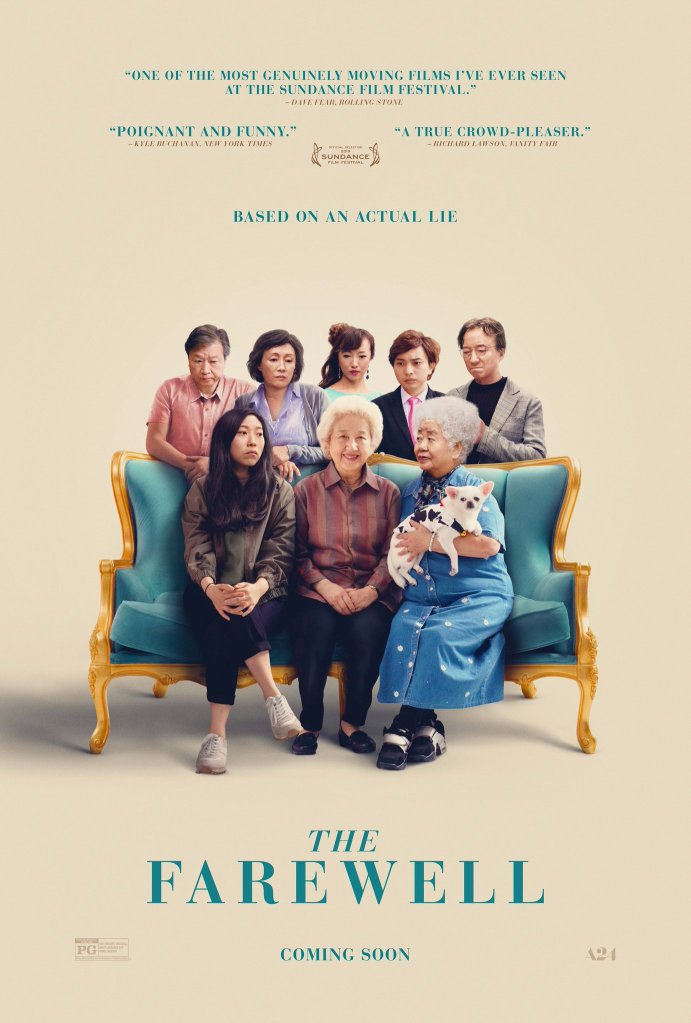
Last time I went on a rambling campaign to make The Last Black Man in San Francisco your next favourite movie, as well as lay the ground work for why very specific details in a story can make it even more accessible. And now, I’m going to change my mind and say that The Farewell should be your favourite movie.
[spoilers after the jump, obvi]
Alright, so last time I was obviously obsessed with TLBMISF and maybe, you could argue, that was just because I live in San Francisco. “Chelsea, those very specific details only resonate with you because you’ve lived there for nearly 8 years and because you ran across that movie a handful of times during its production. I really don’t see how that story would appeal to anyone outside of you. Why are you crouching?”
And right when you say that, I pop up and proclaim, “OH YEAH? THEN WHY DO I LOVE AND IDENTIFY WITH THE FAREWELL SO MUCH? RIDDLE ME THAT, SKEPTICAL SKYLAR!!”

I mean, I raise a good point. On its surface, The Farewell isn’t really gunning for me. But damn, I felt it in my heart. I saw the film at the San Francisco Film Festival and it felt like a key part of my life had been seen, respected, and then beautifully sung back into the world.
Stop me if you’ve heard this one before: a Chinese-American woman finds out her grandmother has been diagnosed with terminal lung cancer. Her grandmother doesn’t actually know this, though. It’s customary in Chinese culture for family members to be told of terminal diagnoses (instead of, you know, the patient) and for the family to keep this information from the patient. It’s believed knowledge of a terminal diagnosis will be a burden and will make the condition worse for the patient.
The family of this grandmother (Nainai) decides to quickly throw together a wedding banquet for a grandson as a way to get the family together one last time, to say farewell to their beloved matriarch. Our first generation protagonist is torn. Does she remain complicit in the lie, or does she tell her grandmother as her American influence is compelling her? What’s a girl to do?

You maybe heard this on an episode of This American Life, where it first appeared. Lulu Wang is the Chinese-American granddaughter in question. Her family upheld the cultural norm of not telling a dying elder, threw a quick wedding banquet for her cousin, and struggled with their one-sided grief.
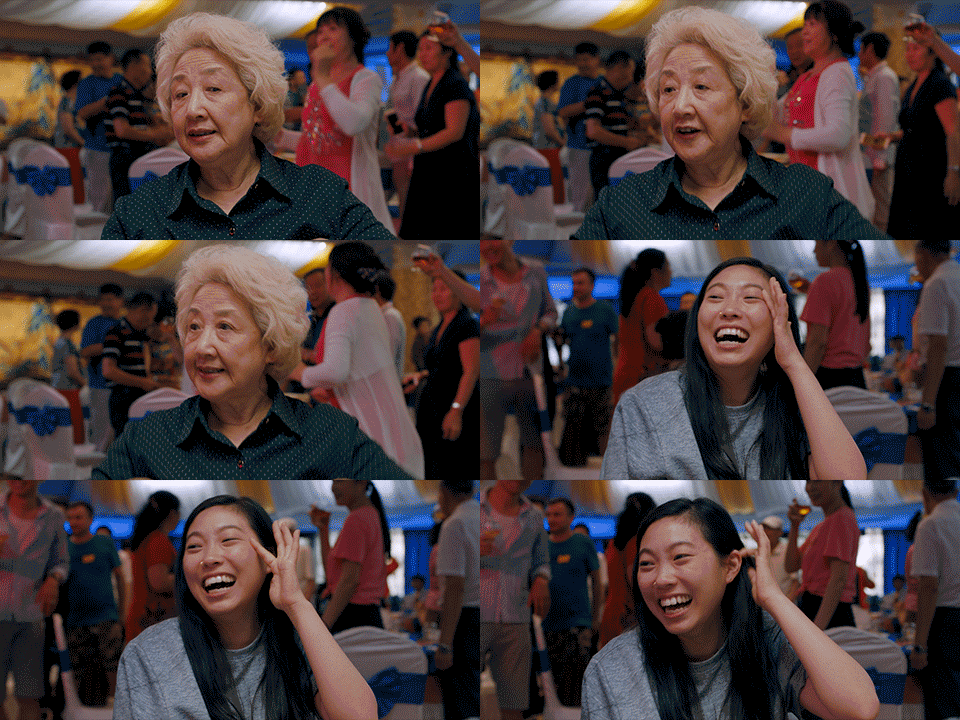
Wang turned her real life into a feature film, The Farewell. She casted her actual great-aunt (Little Nainai) as her great-aunt in the movie and filmed a block down the street from her Nainai’s apartment. Which would be a touching remembrance to her grandmother if Nainai had died. But she hadn’t. At the time of writing and seven years after being diagnosed with stage four lung cancer and only three months to live…Nainai is still kicking.
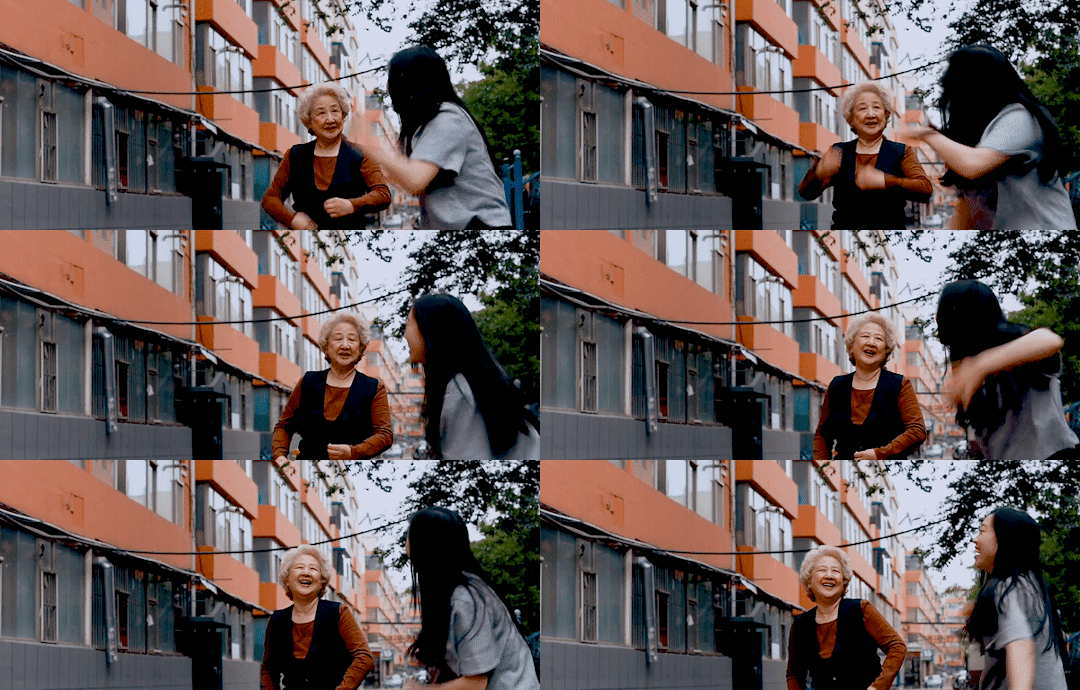
I mean, I don’t mean to be rude, but idk if recording a podcast and making a film in her town is the best way of keeping the secret, but what do I know, maybe keeping cancer a secret from the afflicted is the best way to keeping cancer at bay!
To elaborate more on what I don’t know, I don’t know anything about being a Chinese-American woman. I know nothing of having family in China. I don’t know jack shit about having to hide, along with the rest of my family, my grandmother’s cancer from her. And yet…and yet…

I found myself identifying with Billi, Wang’s film alter ego, (portrayed tenderly by Awkwafina). I found myself identifying with her dual cultures, the warring influences that at times seem completely contradictory and irreconcilable. I am French and American, and while those two cultures are not as far apart as American and Chinese, they still have their differences.
Billi’s father, uncle, and great aunt have decided they wouldn’t tell Nainai of her cancer. While every member of the family struggles with this, Billi has the added internal discord of having been raised in the United States. Both China and the US value honor, but each culture has different ways to showing that honor. Chinese honor seems (from my limited exposure) more focused on familial obligations, whereas American honor is built around honesty and personal integrity. There can be a situation when those two definitions overlap, but in this particular narrative, they represent the classic argument between collectivism and individualism. The family has decided on a path, informed by their culture. Billi’s instinct is to do the opposite. She’s had different influences that are screaming within her, saying that lying is bad and demeaning towards her grandmother.
As a country full of immigrants, culture wars like this are occurring in households from coast to coast in the United States. I mentioned being Franco-American. Though I might be of acceptable white immigrant stock, we weren’t rich immigrants and I find myself identifying quite a lot with immigrant narratives, like parents pushing for good grades because, “In this country, education is key.” My mom didn’t understand a lot of American things and I have countless hilarious/traumatic stories of me having to explain very basic things in my childhood to her. A quick one: I remember telling her I needed her to pack a snack for my school’s snack time (the French, for the most part, don’t believe in snacking), but my lunch always had a dessert because a meal isn’t complete without a dessert.
Okay, so not everyone can all relate to this inter-cultural divides. A more common struggle is that of generations. Family elders say “This is tradition, this is how we’re going to do things, and you can either get in line or get out.” They carry the responsibility of their family and the younger generation feels stifled. It doesn’t matter what they’re arguing about, or even which culture. This generational tale is as old as time.
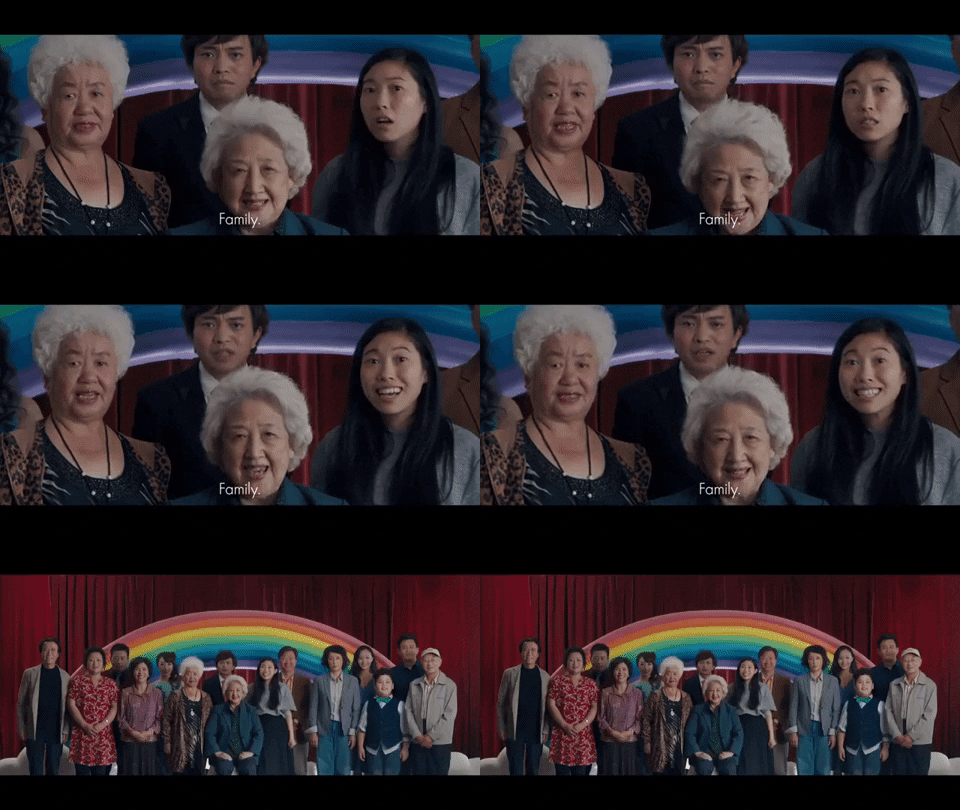
I believe The Farewell‘s genius lies in the minutiae of culture. I can imagine Wang sitting with her other Chinese-American friends and saying “You ever notice when [insert hilarious observation]?” By including these observations, Wang isn’t poking fun. She’s building a bridge to viewers. Either 1) Chinese-Americans (of which there are over 5 million in the US) see it and feel the insider connection. “Ah yes, I get that, I too have experienced that very similiar thing.” or 2) non-Chinese-Americans see it and…still feel the connection. Because more likely than not, these behaviors represent transcultural motivations, like generational or immigrant divides.
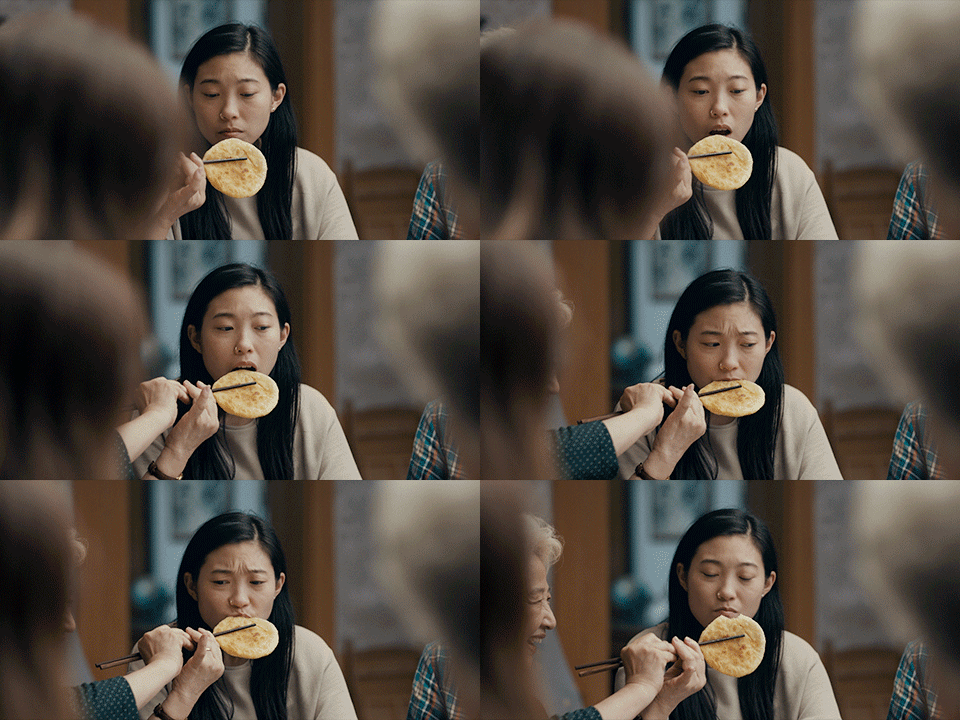
Let’s take Nainai’s immediate reaction to seeing her granddaughter. “You’re too skinny. Eat!”
I mean, most grandma’s everywhere embody this stereotype. I may not know what it is Nainai is forcing in Billi’s mouth and my grandma doesn’t eat with chopsticks very frequently, but damn do I know the feeling of being force-fed carbs. And maybe your grandma didn’t do that for you. But more likely than not, some caring figure in your life forced you to eat what they thought of as wholesome food. Most of us have felt that fretting, felt that care, and we fucking ate that food.
The Farewell is full of moments like this. I already mentioned the generational and immigrant tropes at play. But the biggest draw for me was Billi’s relationship with her grandmother. I’m quite close with my grandparents, especially my French ones. My parents would send my siblings and I to France for the summer every year as soon as school let out. The day after that last day, we’d be on a plane. Three months we would spend with our grandparents, returning the week before school started. I’ve never been to summer camp, with only documentaries like The Parent Trap and Wet Hot American Summer to teach me.
My grandparents would also come for about a month, two months, in the winter for the holidays. That’s a lot of time spent with grandparents. They are my second set of parents. I love them dearly and I will be absolutely devastated when they pass.
The worry of international families is heavy. If something happens to dear Grandma a continent away…who will care for her? If work is flexible and you have enough for tickets…will you get there in time to say goodbye? Families across the world have become accustomed to this dread. Years between visits and phone calls to sustain us in the meantime. For whatever reason, be it war or threats or the promise of a better future…families have separated, never knowing when the next time will be that they’ll see each other, or if the last time was, well, the last. And in that way The Farewell is a very global story.
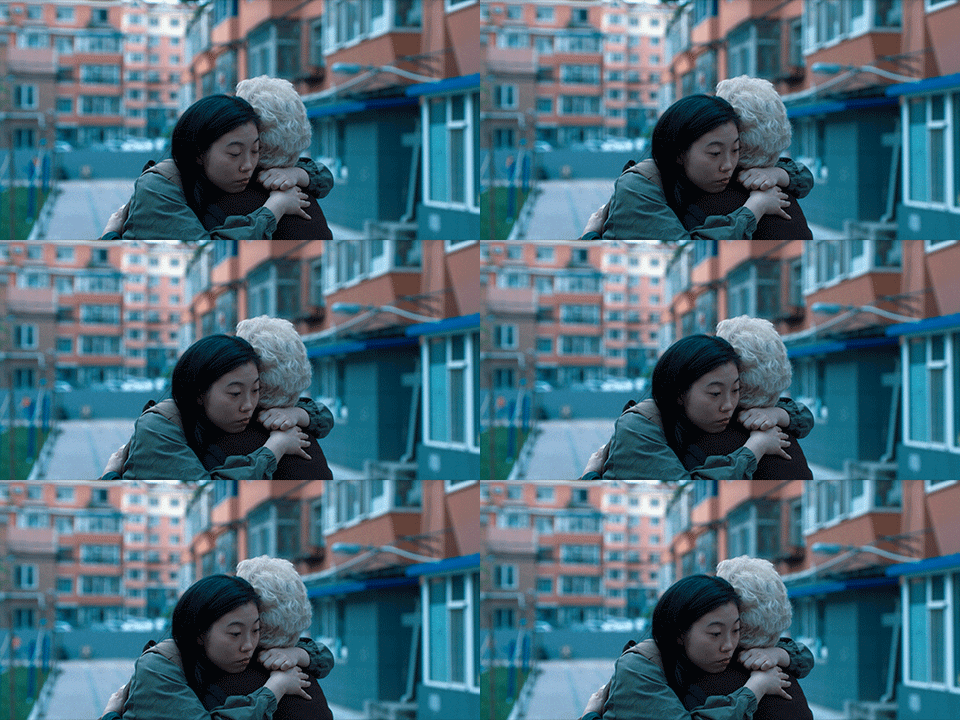
And I guess I don’t even mean in the macro. I mentioned I saw this movie at the SSFF. The filmmaker and real-life Billi, Lulu Wang, was there! She conducted a Q&A after the film. She talked about how many people from different countries and cultures have told her that they’ve participated in this specific practice, of keeping a terminal diagnosis from an elder. Apparently, as I write this, a whole lot of people are out there, lying to their grandparents. What monsters!
I mean…yes, we’re all telling our grandparents we’re doing better at our jobs than we really are. And yeah, we may not be totally truthful about how poorly our love life is going, or how we’re completely unsure of what we’re doing with our lives and how that dread keeps us up at night. But we don’t tell them all that because we want to protect them. Oh.
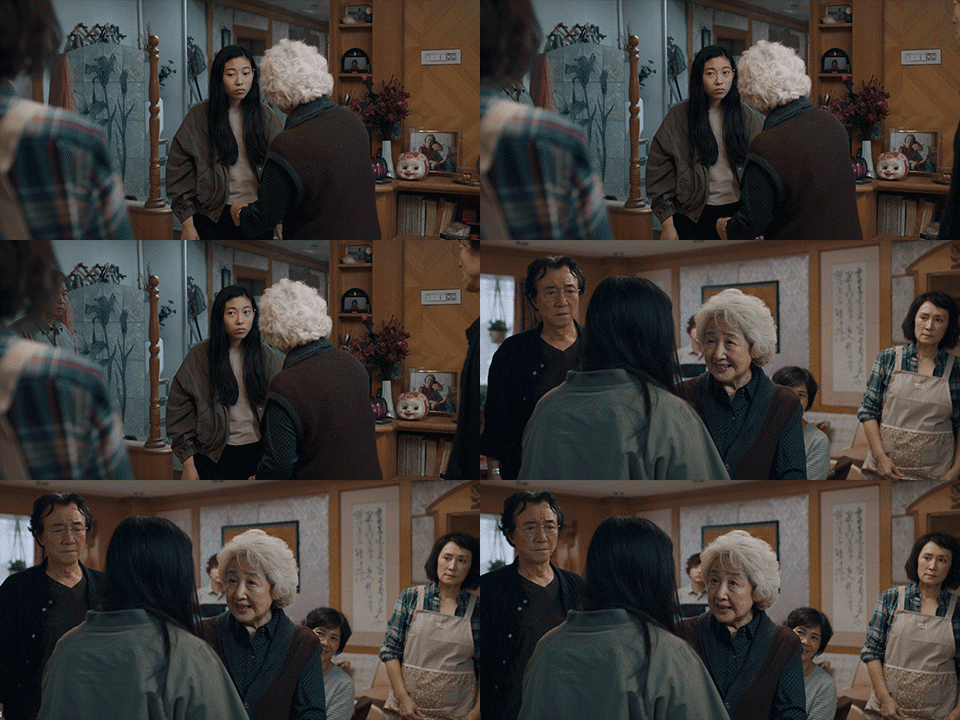
And so every one of us who lies to loved ones, even little white lies, are engaging in the same form of what Billi and her family do. On one hand, it’s kindness. On the other, it’s immoral. It might be permissible by one culture’s standard, but unforgivable by another. It’s loving. It’s deceitful.
The Farewell doesn’t give us a nice answer. There is no right or wrong, there’s just love and pain. That’s normal, everyday life for a normal, everyday family. This movie, by weaving larger themes throughout the context of daily life, makes these transcultural stories and motifs so much more understandable and accessible.
If Wang hadn’t included a lot of those minute details, the way Nainai fed Billi, the awkwardness of the wedding photoshoot, Nainai’s Communist roommate…she would have been left with a film that reached too far with no basis of reality. It would have been completely inaccessible to outsiders. The details are the bridge. With them, we can identify with the larger themes. And due to the larger themes, we can see more of the details. It’s a two-way bridge of exposure, acceptance, and love.
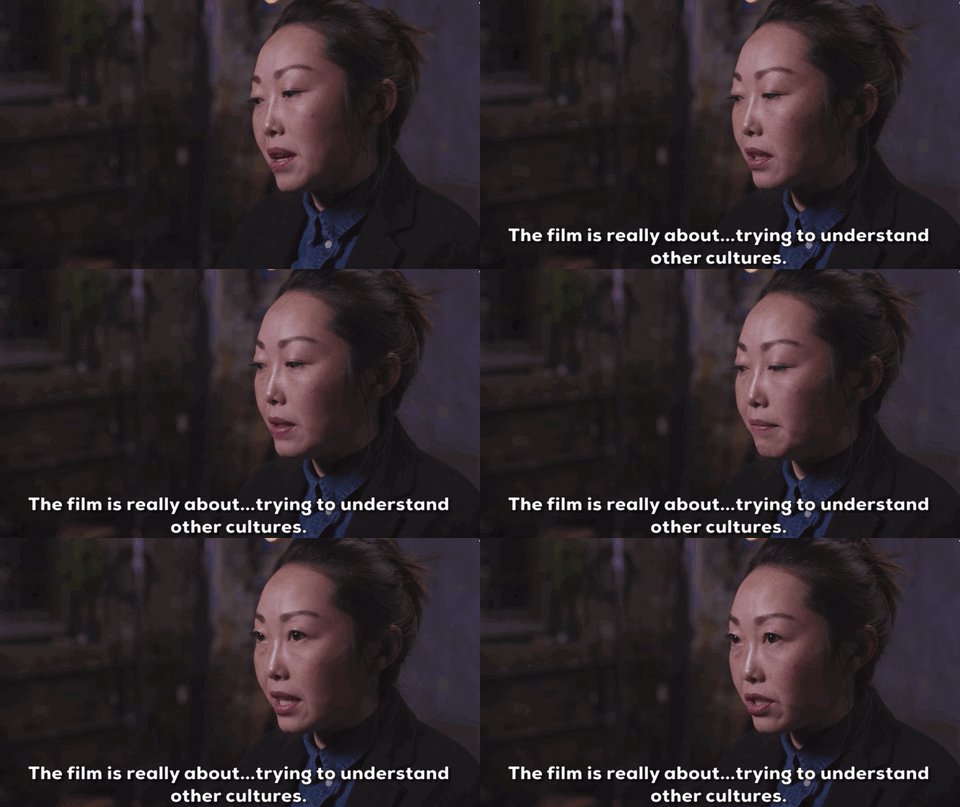
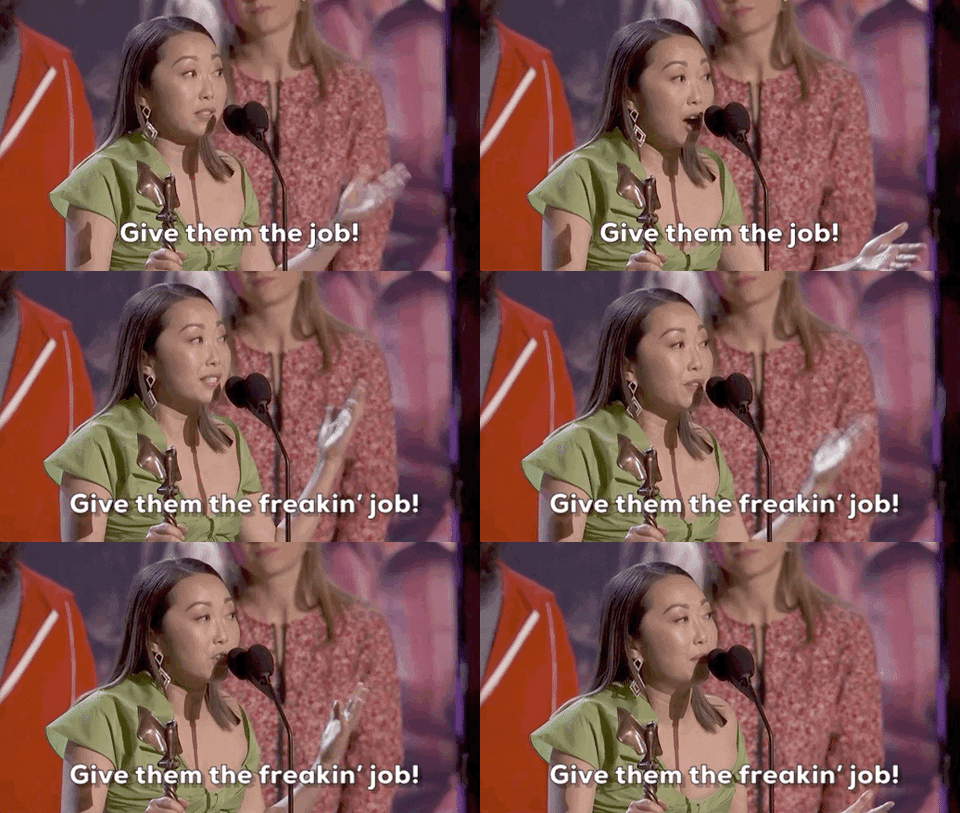
At the time of writing, these films are two of the most lamentably overlooked films of 2019. They pop up time and again as some of the best films of last year. They’ve gotten some recognition, like at the Indie Awards where The Farewell won best film. BUT NOT ENOUGH, SAYS I.
When writing these last two posts, I was taken aback by just how much I could identify with these characters, how many connections I could draw from their lives to mine. And I’ve not lived a very dramatic life.
Maybe it’s another case of a white person taking something from people of colour. But I can honestly say that many other people would feel the same way if they saw these movies. So I’m asking you to check these two movies out. Watch them. Cry with them. Laugh with them. Feel how much they care, and how much you can identify with them. Then tell me I’m wrong.
I’ve done a poor job in relating these two films and my larger thesis back the mythology. I’m a hack! So, in true Chelsea fashion, I’m going to be back with a THIRD installment dedicated completely to how mythology uses details to connect with audiences.
Until next time.
 The Chelsea