In which we catch up and I embark on something way too fucking big….
~spoilers for the year 2020, Network, Midsommar, and The Lord of the Rings~
My partner and I did a film challenge in 2020.
We also did so much more. We survived a panorama, unlike nearly 600,000 of our fellow Americans.
But, before we knew about what 2020 had in store for us, we decided to do a film challenge for the year. Every month we’d watch 4 movies from a decade. January would be the 1900s, February the 1910s, and so on until December, where we’d watch films from the 2010s. We though it’d be a wonderful way to spend the beginning of a whole new decade of cinema.

How we started

How we ended up
As the year progressed and the panna cotta continued, our film challenge quickly became one of our sole indicators that time was moving. With no new releases in theaters, it truly felt like we were slowly making our way through history, one film at a time. For instance, April now feels like the time to watch black and white films. King Kong, Stagecoach, All Quiet on the Western Front…these films were the compass guiding us through the daily sludge.

Actual footage of us looking for toilet paper in April 2020
Now in 2021 without our historical film challenge (but still in the pandemi moore), I’m finding myself temporally disoriented. Should we be watching only silent films? Or are we planning vacations? Why don’t my jeans fit? I could have sworn they fit me last wee-…December.
So I’m reflecting and nostalgic for our historical film challenge. It really was a delightful experience (all things considered). We got to:
- see the evolutions and changes in careers (most watched director: Scorsese).
- see new sides of creatives we had previously written off (most watched actor: Gene Hackman).
- “meet” new-to-us people and titles (Häxan and West Side Story are progressive AF, King Kong is a genuine FX marvel).
- find out for ourselves that the Marx Brothers were menaces and it is truly baffling that they were entertaining.
- see America go through optimism (50s, some of the 60s), disillusionment (70s), and then pure capitalism (80s) – which is its own kind of optimistic delusion.
We learned a lot and I encourage everyone to embark on their version of this. You’ll find films from decades ago that speak to what you’re going through right this very moment. You’ll realize that time is indeed a flat circle and you’ll gain comfort in the knowledge that nothing we’re going through is new. Hopefully you won’t be doing it during a pan de leche, but if you do I can assure you it will be soothing.
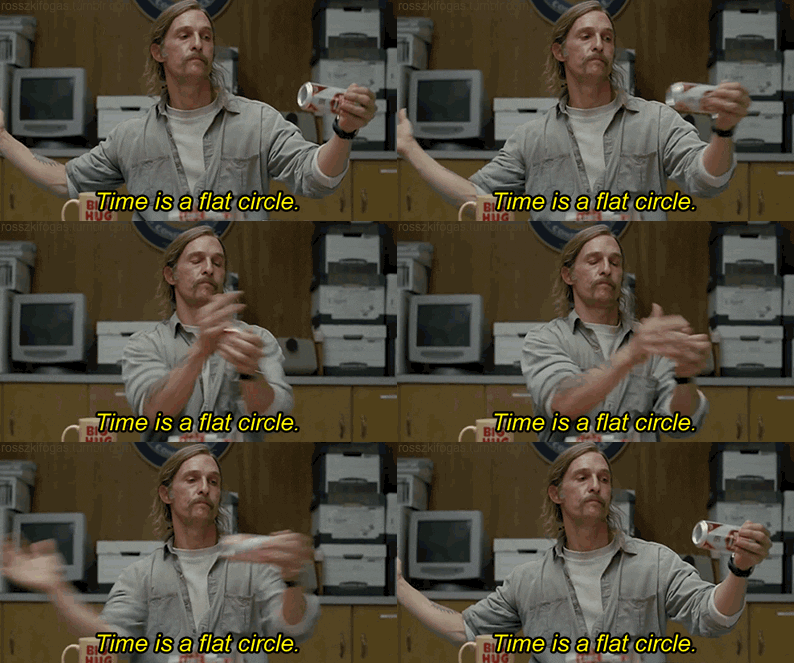
Other actual footage of me drinking at 2 pm on a weekday
I’m speaking from personal experience. I could go on at length (and already have) about any of the films we watched (except Duck Soup, fuck that movie). But for today I’ll stick to the one that stuck out in my mind for months, nearly at year at this point. It blew my fucking socks off and I hope it’ll do the same for you.
I am, of course, talking about Network.
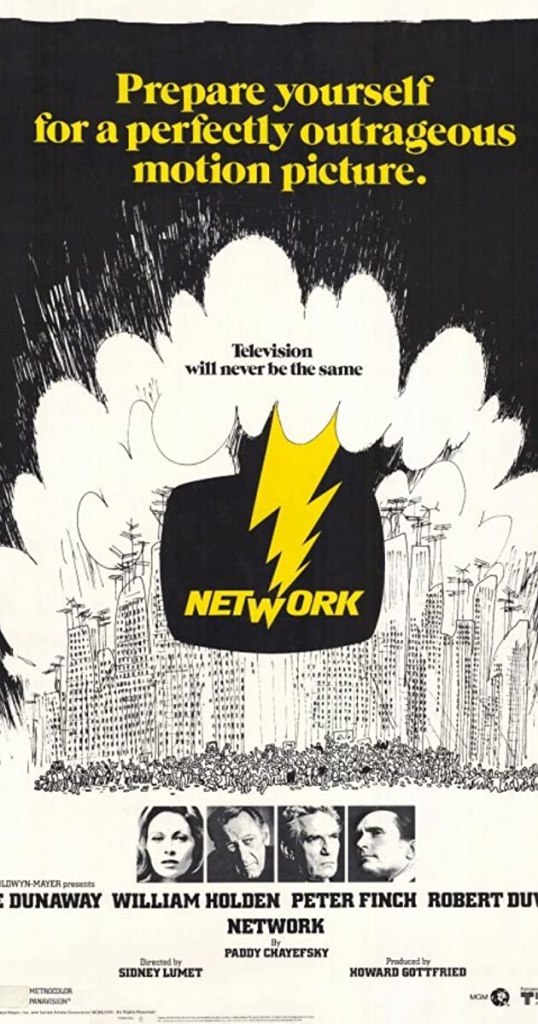
BOOM baby
I think everyone who watches Network says the same thing. Vegans, boat owners, and people who have seen Network. It’s.all.we.talk.about.
If you haven’t met one of my people before, let me give you a quick rundown. Written by Paddy Chayefsky, directed by Sidney Lumet, it’s a prescient film that foretold all our problems.
But no, really, that’s what it is. Turns out Chayefsky knew that “the media” and opinion journalism were gonna be problems about 50 years ago. And he told us. And he roped in some of the best actors (Faye Dunaway, William Holden, Peter Finch, Robert Duvall) also tell us.
Alright, you want some more details. I get it. Upon news of his impending firing, an aging white news anchor (Peter Finch) has a series of on air meltdowns, stirring the hearts of viewers across America. Not out of sympathy, but out of fanatic adoration. His segment is exploited for ratings by the new, young, and white female news department leader (an electric Faye Dunaway). The network uses these explosive rants and revelations to unleash a never-before-seen era of news and media, one that blurs the line between truth and propaganda, journalism and entertainment. Gee, that kinda sounds familiar….
The performances are wonderful. William Holden plays the self-same weary professional he gave us in Sunset Boulevard, but now he’s actually earned it. Robert Duvall oozes corporate ladder rat. Faye Dunaway fully seduced me through the screen. And Peter Finch…well, his big raving scene is what brings us here to day.
It’s a magical four minutes. It starts with Peter Finch’s character, the aging news anchor whose days are numbered, arriving very late to work after being missing all day. He’s still in his pajamas, soaked from the rain. The news segment is about to air, has actually already started airing, and he waltzes in. (He’s allowed to do so because Faye Dunaway saw potential for a hit in a previous rant.) He then proceeds to lyrically lament the societal woes that he sees, woes that don’t seem all that different from what we hear today.
We all know things are bad. Worse than bad. They’re crazy. It’s like every thing’s going crazy. So we don’t go out any more. We sit in the house, and slowly the world we live in gets smaller, and all we ask is please, at least leave us alone in our own living rooms.
Okay, yeah, that struck a nerve. Nothing in August 2020 rang more true to me. But Chayefsky, through Peter Finch, isn’t done speaking to us in the future. He continues a few lines later.
Well, I’m not going to leave you alone. I want you to get mad.
I don’t want you to riot. I don’t want you to protest. I don’t want you to write your congressmen. Because I wouldn’t know what to tell you to write. I don’t know what to do about the depression and the inflation and the defense budget and the Russians and crime in the street. All I know is first you got to get mad. You’ve got to say: “I’m mad as hell and I’m not going to take this any more. I’m a human being, goddammit. My life has value.” So I want you to get up now. I want you to get out of your chairs and go to the window. Right now. I want you to go to the window, open it, and stick your head out and yell. I want you to yell: “I’m mad as hell and I’m not going to take this any more!”
I was amazed. This scene could have easily been written for today. I was once again reminded of this wonderful, time traveling ability of storytelling. But more than anything, in that moment, I was transfixed by how good it feels to scream. Trapped in our homes, immobilized by invisible government orders, invisible dread, an invisible threat…screaming (and clapping out our windows) seemed to be the only outlets we had. Oh, and baking bread.

My only friend.
That scene captivated the country in the film just as much as it did me. Viewers became acolytes in this deranged news anchor-cum-prophet’s church. They gathered for tapings and ultimately witnessed his on-air death. He was their Jesus, gone too soon. Only we as the audience saw how much he was a puppet of the network and the corporation who owned it all. He was a false idol, but oh how they idolized him.
And this appeal, imho, was largely rooted in his truth telling. He made space for the pain and anxiety of a people. He looked it straight in the eyes, naming it when people didn’t even know it was in them. And he let it out.
This identification and release of powerful feelings beneath the surface is a strategy used by many historical figures, heads of states, and characters, heroes and villains alike. At its most elementary, it makes people feel less alone.
I’m here for you, Detective Pikachu
It’s amazing how much we as a species don’t want to and can’t be alone. Don’t get me wrong, sometimes you just want to get away from it all. Go on an Eat, Pray, Love tour by yourself. But even in those moments, if someone looked you deep in the eyes and said, “I am here. You aren’t alone. I am by your side,” you’d probably let loose the biggest sigh your body could manage. But what would if happen if they looked at you…and screamed. What if they gave voice to your pain?
As a white girl born to a family that frequently moved and wasn’t part of any organized religion, I’m equal parts intrigued by and scared of collective feelings. Any time I’m in a crowd or at a demonstration or even the occasional sports event (my usage of “sports event” should clue you in to how “occasional” that really is), I’m acutely aware of the crowd’s emotions and how quickly it could turn into an angry mob. And then I’m reminded how thankful I am that pitchforks aren’t readily available these days.

Wait, are pitchfork crafts actually a thing?
But I want to face this fear of mine head on. We as a species are wired to want to be together. As the past year has shown us, it is devastating when we can’t join together, especially in high emotion moments. So how can we embrace the positive, cathartic power of the collective without going full mob?
There’s no better movie to start this inquiry with than…Midsommar.
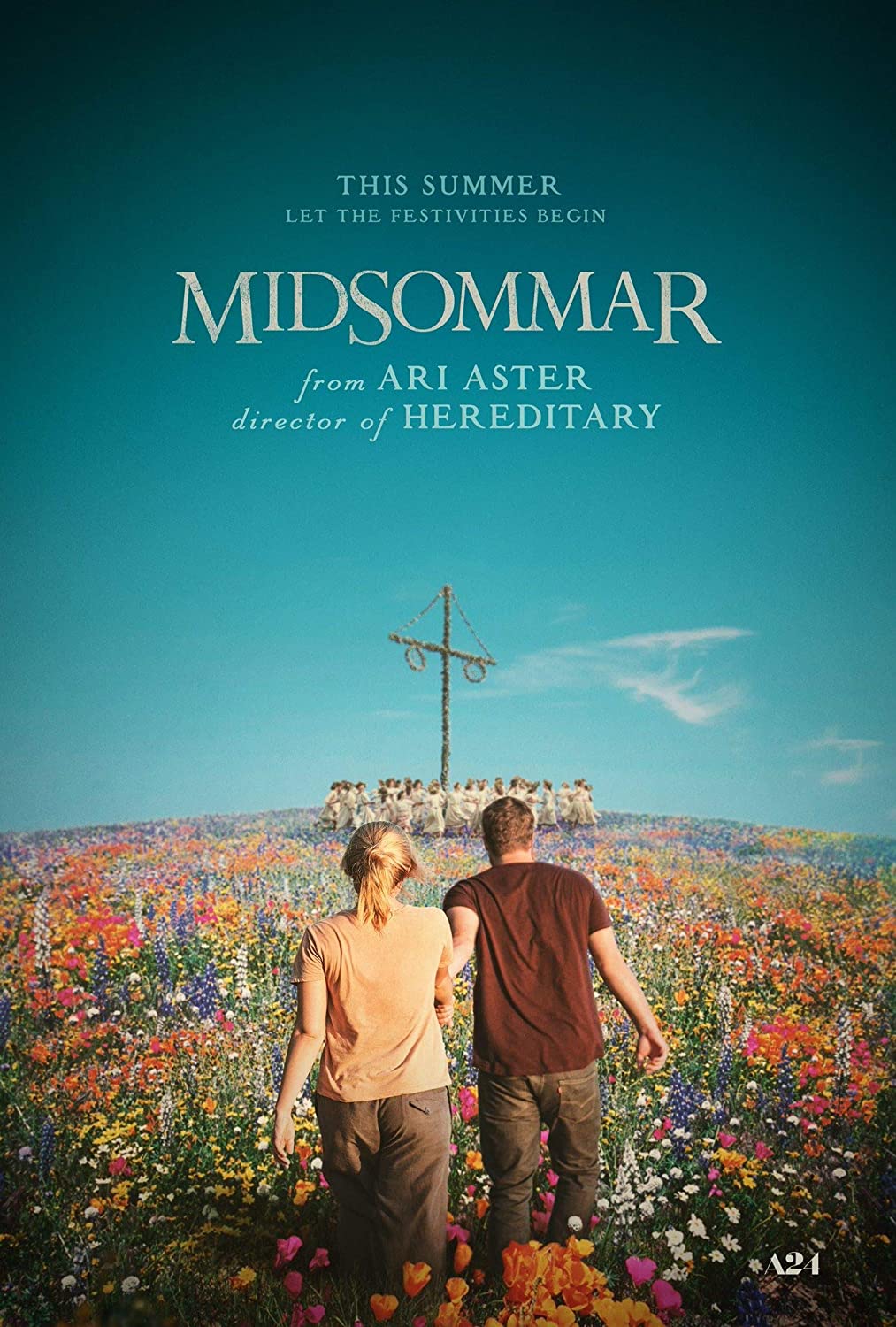
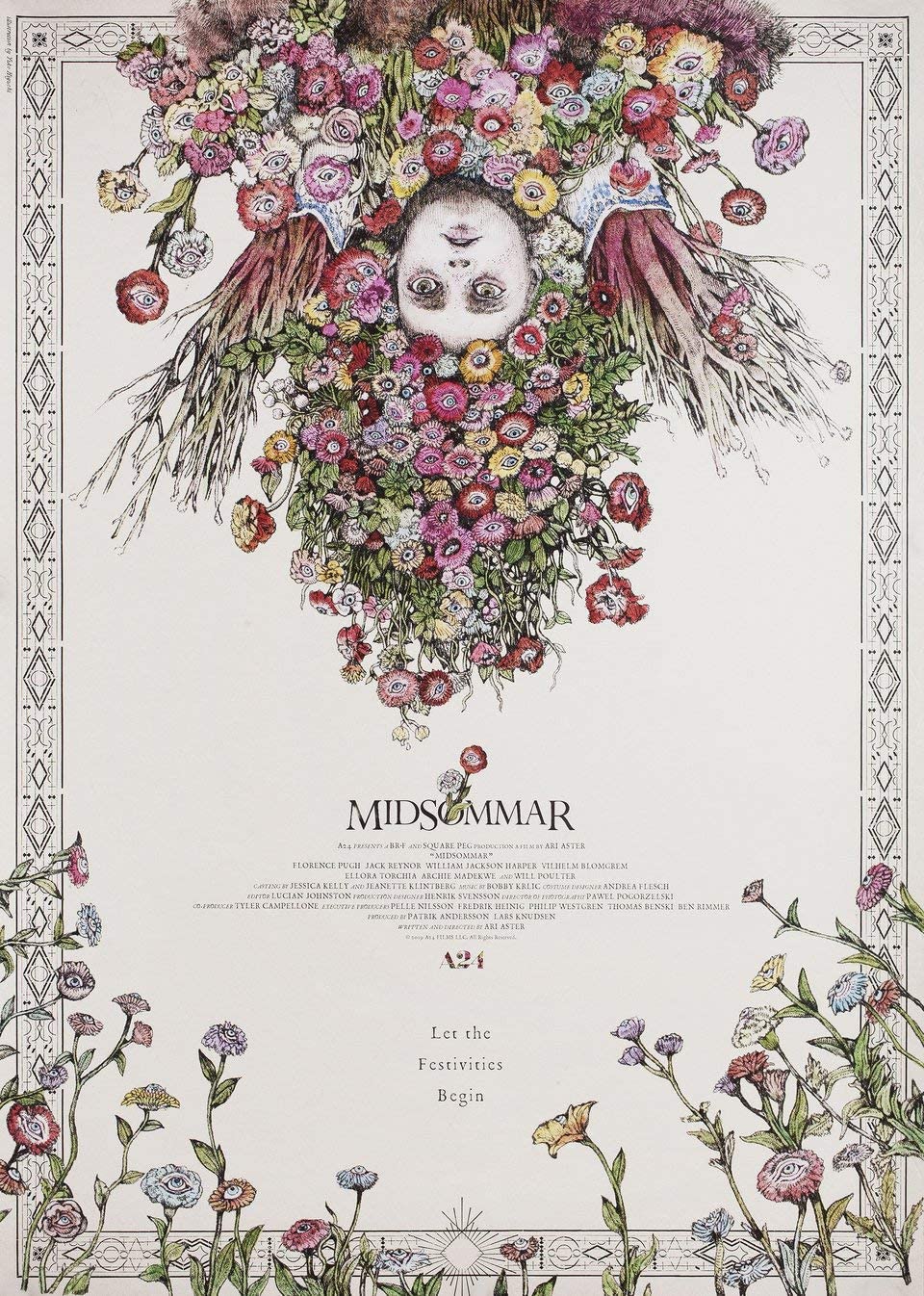
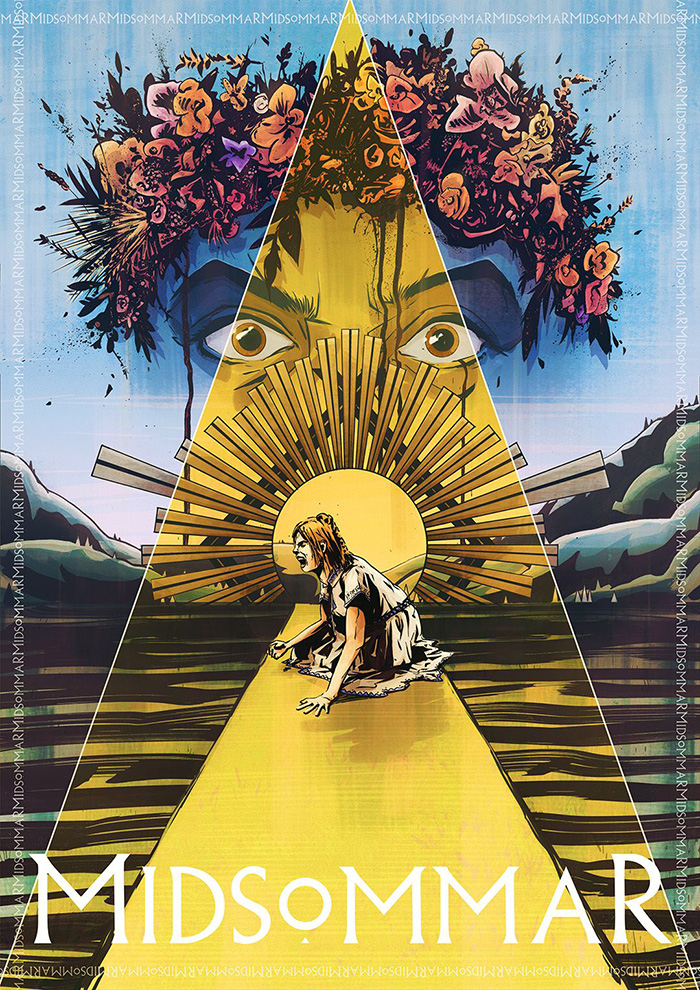
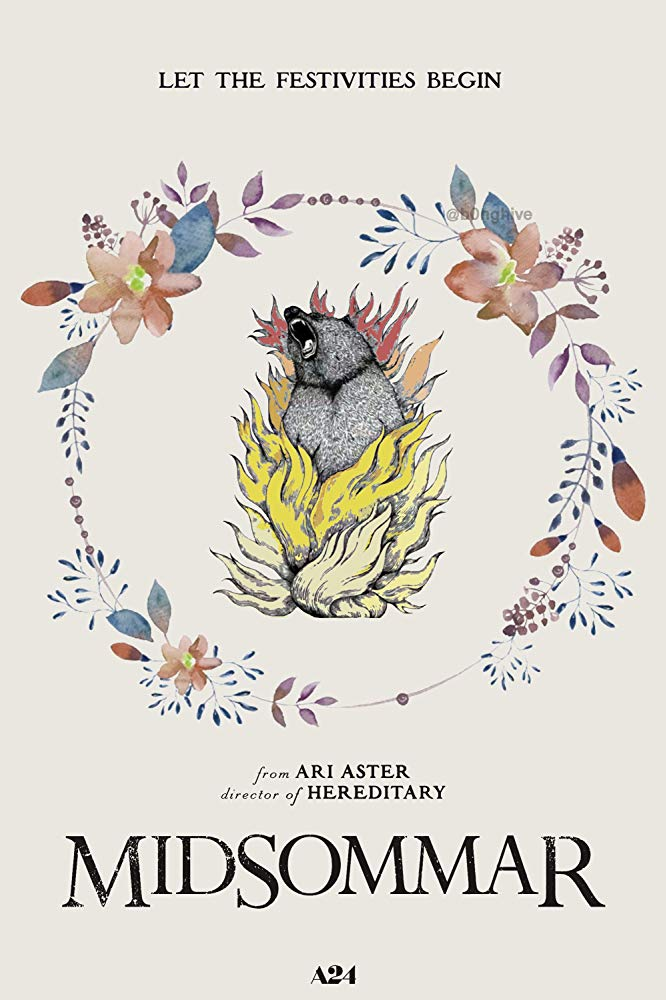
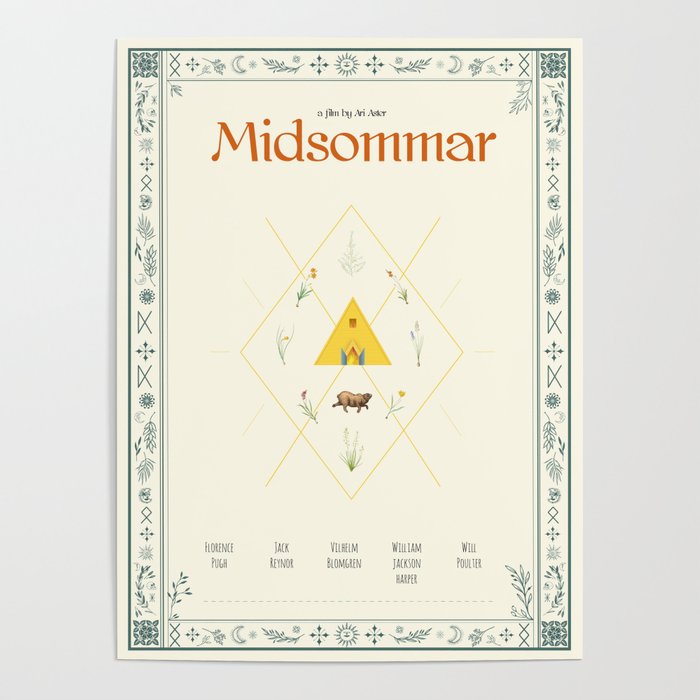
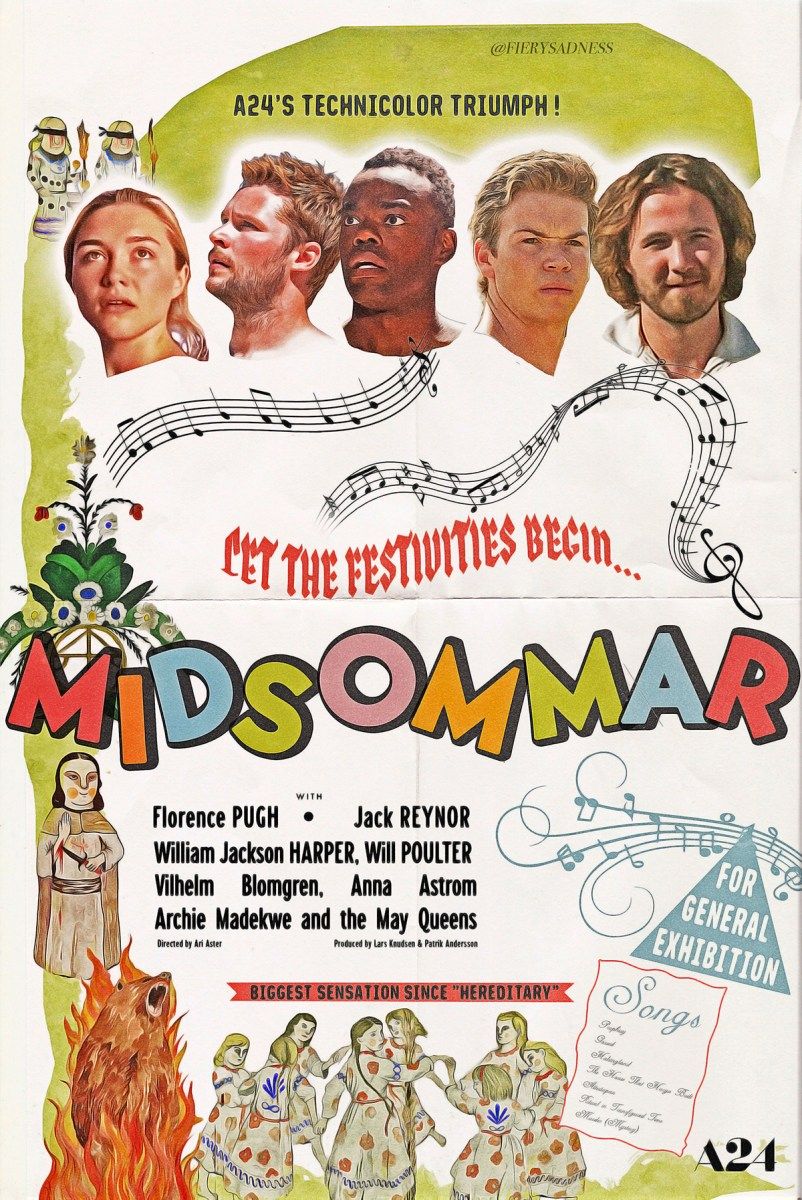

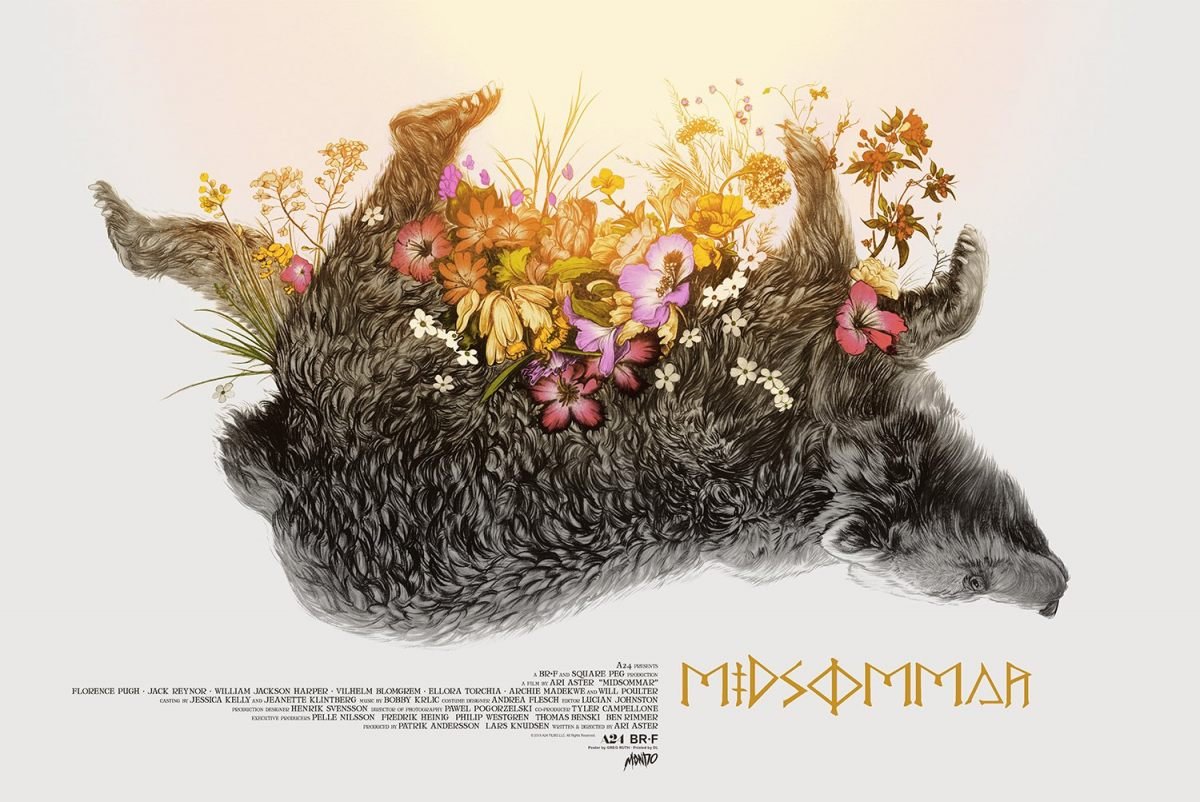

It was hard to choose just one poster.
C’mon, you knew I was going to go there. That scene. That scene! No, not that scene. I’m talking about the screaming, crying scene.
For those of you don’t know and don’t mind being spoiled, Midsommar follows Dani, a white woman who, after her sister kills herself and their parents, accompanies her one-foot-out-the-door white boyfriend and his friends to an isolated Swedish village for their midsummer festivities. Dani is steeped in grief and her shit boyfriend is just.not.there for her. As it becomes clearer that the village has nefarious, murderous intentions in inviting these outsiders, the audience is also witnessing a woman grasping for support and who is let down again and again. It’s a frustrating combination of gaslighting, neglect, and straight up cruelty, a cocktail only the patriarchy could whip up.

Yum!
Eventually the village drugs and seduces (arguably rapes) Dani’s boyfriend. Literally, the whole village. They’re all in on it. Yes, there’s the village girl he’s having sex with, but also there’s half of the village’s women surrounding them, her mom is holding her hand, an older lady starts pushing his butt because I guess she thinks he’s not doing it right? They’re all chanting along with the coital grunts. Really, all this is a really elaborate way to get some genetic variety into the village gene pool. But, um…Dani sees it.
This is, for her, the final straw in her boyfriend’s transgressions. She runs out and away, overcome by her compounding grief and anger. She’s quickly scooped up by some more village women, the ones who weren’t on baby-making duty. They gather Dani up and they hold her. Not in a restraining way completely, but in a supportive embrace. She cries and screams. And they cry and scream with her.
Even though we know these people hugging her are partly to blame for her pain, we’re happy for Dani, in a way. We’re wary that she’s being folded into this murderous community. But we’re also relieved that she’s finally got a community.
This act of being seen, held, and carried is so powerful that Dani ultimately decides to side with the cult and agrees to have her boyfriend burned as a sacrifice. And when the movie came out, a lot of people applauded her decision. At the bare minimum, they thought it was justified.
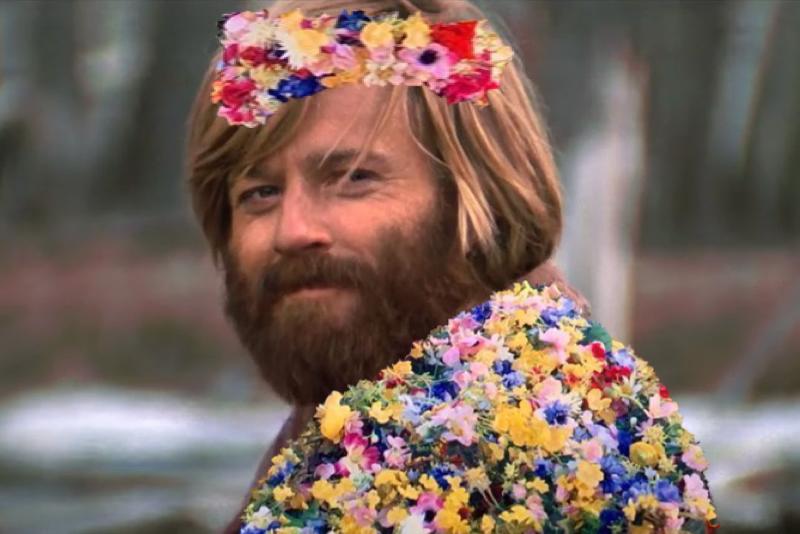
Smiling man approves of sacrificing your shit boyfriend
What Midsommar highlighted, besides a whole new level of floral fashion, is that people don’t want to just be held when things are hurting. It’s not really enough to comfort someone with, “I see your pain.” What we really want is for someone to say, “I feel your pain too. Let me carry it with you.” That’s what the village women are doing in Midsommar, both the group orchestrating the baby-making rape and those holding Dani. Those with Dani aren’t offering her platitudes, they’re carrying her pain as their own, matching their breathing to hers. They aren’t holding her, they’re holding her pain.
I have my theories for why we’ve gotten to where this is such a revelatory scene. Individualism in the West, in the U.S. in particular, makes it so that self-reliance is a virtue. Anything less is a weakness. With that mindset, how on earth could you ask for someone else to lighten your load, to carry your pain for a bit? That’d be a huge imposition and an embarrassing admission that you just couldn’t cut it.
But if every interaction comes with the risk of admitting weakness, what we’re left with is a model where we don’t know how to relate to one another. Think of The Lord of the Rings. The inability to literally share the burden (a burden we’re warned about as being toxic) was so profound that even in a group specifically selected for that purpose it ultimately fell down to just two, Samwise and Frodo. (Really, just Samwise.) Remember, we started out with nine people. Yet only two actually made up the Fellowship. You can start seeing how this failed approach at the collective works as a parable for relationships, governments, and work culture in the U.S.
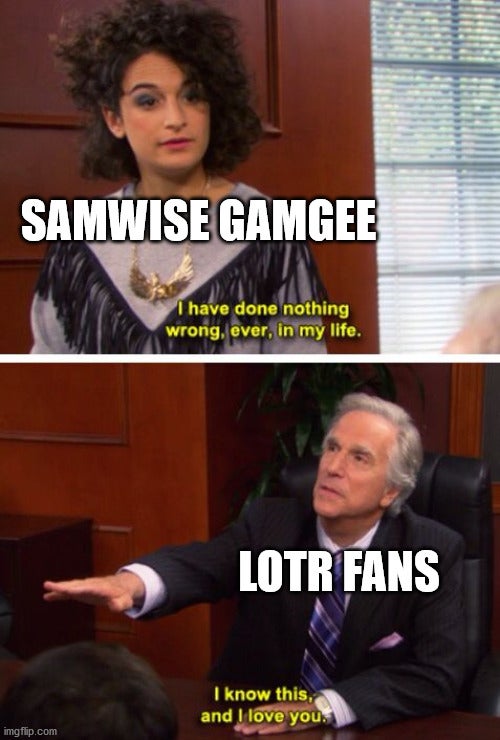
And If we’re so scared to or can’t connect to one another in a healthy way, that makes us susceptible to con artists and cults, as we see in Network and Midsommar.
As an aside, in Sweden there’s a neighborhood where every night at 10 pm people scream in unison. It’s a neighborhood that’s predominantly full of university students, but I’m thinking the Swedes are onto something.
When I was a kid, maybe 8 or 9, after a particularly bad fight with my siblings (yes, I am an eldest child, how could you tell), my mom told me that whenever I’m really really angry, I should scream into my pillow. I’ve come across many people who were taught or found this tactic. I’ve used this over the years, but I never feel good afterwards. What if, instead of telling me to scream into a pillow, by myself in a room…my mom screamed with me?

My mom
Network and Midsommar ask that very question. What if we join in each other’s pain, instead of simply witnessing (or worse yet, ignoring or denying) it. What if by spreading that amongst two, three, 15, 100 people, it gets diluted and lighter? Could we heal just a little bit faster? Could we become just a little bit stronger for the next time?
That’s the cathartic power of the collective that I’m interested in. Over the next few posts, I’ll be exploring it, looking to films, books, and of course myths. As we’ve seen the rise of populism across the world, it’s important to understand how we connect to each other, what drives collectives (and individuals), and the ever-lurking Shadow.
I have a rough outline of where we’re going (formed over months of rumination, conversation, and notation), but I always reserve the right to change my mind and steer us way off course.
Next time I’ll be looking at Bacurau, The Village, the Harry Potter series, and The City We Became. If you haven’t seen or read those, you might want to do that because I’m riding that train to spoilerville. Check back in a few weeks when I dive into other depictions of the cathartic power of the collective. Until then, I’ll be screaming.

 The Chelsea