
Every once in a while, there comes along a film that touches your soul, your heart, your very essence. It’s a movie that sees your life experience and reflects it back to you. In 2019, I had this pleasure not once, but twice. The two movies that spoke to me so deeply and truthfully were, of course, The Last Black Man in San Francisco and The Farewell.
In this post, I’ll only be covering The Last Black Man in San Francisco. Next week I’ll dive into The Farewell.
[full spoilers after the jump]
As a white woman, I feel like I have to explain why The Last Black Man in San Francisco speaks so deeply to me. It probably seems a bit odd. After all, it doesn’t follow a white female millennial as she navigates the world of branding and baking. It actually has a pretty niche story line and isn’t what you’d call #relatable. Yet I’m here to make the argument that through its specificity, the film is actually quite universal.
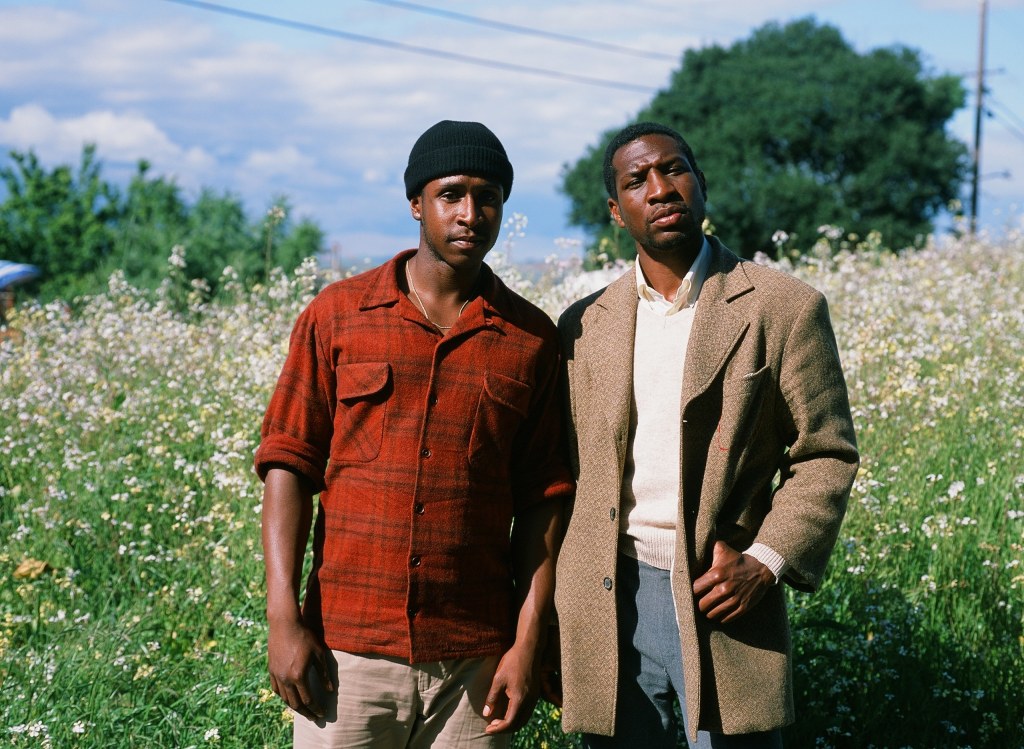
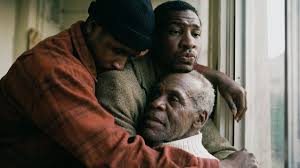
The Last Black Man in San Francisco (TLBMISF) follows the black man Jimmie Fails, portrayed by the film’s real life inspiration, co-writer, and remarkable Jimmie Fails, in (you guessed it) San Francisco. With his best friend Montgomery, played by the revelatory Jonathan Majors, Jimmie is on a quest to reclaim the house where he grew up, the house his grandfather built. Even though the house is currently owned by other people, he visits frequently for maintenance and upkeep. Jimmie lives with Mont and Mont’s blind grandfather. (What’s up, Danny Glover! Remember that one time I saw you at my beach?) Together, they spend their days mindlessly working, waiting for Godot at pitiable bus stops, traversing the Bay Area, and trying to find a home in a city that increasingly seems to reject them.
I have to admit, when I first moved to San Francisco, I felt a similiar feeling. I felt very out of place. I felt like everyone knew what was what, like they all had their lives figured out. I was so sure they must have all been making so, so, so much more money than I was. This was slightly true, since I was a 21-year old transplant who moved out here for a grad school that wasn’t even in the city. I was living off of student loans and was very very lonely.
One day on the book of face, I saw a spec trailer for a potential movie. The filmmaker had made it in the hopes of getting funding to make the entire feature. It was called The Last Black Man in San Francisco. I can’t find a link for it, but I assure you, it existed. Back in 2012, this video showed the same sense of isolation that I felt, being left out of the loop and left behind. I thought it beautifully shot and wished it well.
Fast forward to 2016. I had graduated grad school and had somehow applied my master’s in mythology to branding. I was at a Creative Mornings event, an international breakfast lecture series for local creative communities. (I highly recommend you see if there’s one near you and GO.) The speaker was Joe Talbot, a filmmaker and 5th generation San Franciscan. He was talking about the ways in which the city had changed. He showed photographs from SF’s yesteryear. He then ended by teasing a trailer for a movie he was working on. It was…The Last Black Man in San Francisco.
I didn’t make the connection immediately, but the trailer left me with a sense of déjà vu. When I finally saw the real trailer for the film in early 2019, I finally made the connection and felt a sense of pride and anticipation, like I had actually been working on this movie for years instead of just coming across it a few times over the course of 7 years. I’m the sure Talbot and Fails can relate with me.
So finally, in June of 2019, I saw the film. There was a live Q+A with Talbot, who directed and co-wrote the film, and Fails, who co-wrote and starred in the film, as well as other members of the cast. And I felt that my 7 years of waiting were not spent in vain. In that time, I had lived in three very distinct neighborhoods, had my car broken into and towed, had carried multiple Christmas trees up hills in the rain, had sticker shock every other day, had seen neighborhoods transform seemingly over night, had seen historic restaurants close, had said farewell to best friends who left for greener (and cheaper) pastures, had avoided human excrement more times than I ever thought I’d have to, had more drug deals happen right next to me… and I had never been more in love with my city.
TLBMISF shares that love. It takes that love and magnifies it with an epic score and lush cinematography. It takes Jimmie’s love for his childhood home, his pain towards his gentrifying city, his grief for his family and their flaws, and his undying loyalty to his friend Mont and gives it all the majesty it deserves.
There are a few themes in TLBMISF that resonated with me. The loneliness, as you can probably tell, was particularly strong. San Francisco is a city that has seen its fair share of evolutions. Anyone not in the clique du jour would feel the exclusion. But San Francisco is also a city that has built itself on otherness, on counter culture, on the outsider’s perspective. It’s a city that divides, respects that division, and then unites for the fact that it has divisions.
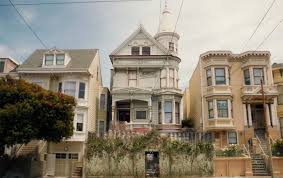
It’s true that this city is currently widening the gap between its divisions. Take the black community. TLBMISFs title is appropriately provocative. The Filmore District, once called the “The Harlem of the West” has lost much of its black residents. The black population peaked in 1970, with 13.4%. Over the years, the percentage has dropped, most recently from 6.1% in 2010 to 5.2% in 2018. Talbot himself mentioned in our Q+A that scouting for the movie was extremely difficult as buildings were constantly being bought and then torn down, or made unrecognizable. The Victorian house of Jimmie’s obsession was the same house Fails and Talbot admired as children (because of course they’re childhood friends) and miraculously it is still around, untouched. Ask any San Franciscan and they’ll say that’s the most impressive part of this movie.
Gentrification is a very real theme in the movie, a very real change affecting San Francisco, and a very real issue for much of America, if not the world. It is not inherently bad, but it frequently is irresponsible, forsaking those it displaces for the glamour of “new” and progress. But progress doesn’t mean much if it doesn’t include everyone.
In TLBMISF, gentrification is a very real threat. Jimmie’s family is displaced. Drug and poverty have a role to play, to be sure, but the lack of central location where his family can gather truly pains Jimmie. His father hawks DVDs and more in the Tenderloin, after having formerly lived in a car. He thought his mother was in SoCal until he happens upon her on one of SF’s notoriously unreliable buses. He hadn’t even known she’d moved back. The only relation with whom he has a functioning relationship is his aunt in the East Bay, virtually a world away. He sleeps on Mont’s floor. He is the type of homeless that people can’t easily vilify.
Jimmie’s entire motivation is to fix the abandonment committed by his family and hometown. The way to do this? By getting back the family home, restoring what has been lost.
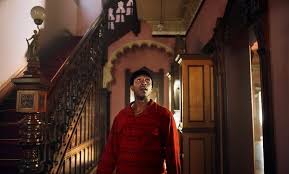
Despite others owning and living in it, he never gives up on the Victorian home and he devotedly cares for it. As he eventually squats in it, moving in his grandfather’s antique furniture, he never gives up on it. As the house goes on the market, he never gives up on it.
The last straw (for the last black man) is when Mont confronts Jimmie with the truth: the house was not in fact built by his grandfather. He’s been staking his identity and last foothold in this city on a lie. There is no longer a place for the last black man in San Francisco.
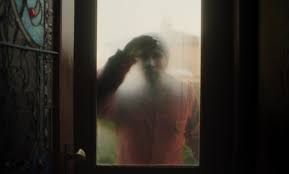
There are, of course, other black men in San Francisco. But there’s no community. The only community is a Greek chorus of black men who hang out on the corner near Montgomery’s house. They taunt Montgomery and Jimmie. They lose a member to a street fight. One less black man in San Francisco.
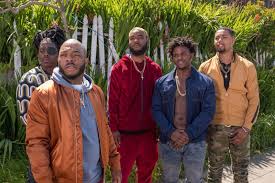
Jimmie of course knew the whole time his grandfather hadn’t actually built the house. But how else was he to justify staying in this city? How else does one claim heritage in a place besides just stating it? You can create the myth that you belong, and maybe it’ll take hold. Or maybe it’ll force you out. Eventually Jimmie leaves, sailing out of the Bay, past the Golden Gate Bridge, in a little row boat. He leaves behind his best friend, Mont, who is revealed to be the new last black man in San Francisco.

“You don’t get to hate San Francisco. You don’t get to hate it unless you love it,” says Jimmie to some white chicks on the bus. I had never heard such beautiful words. The black person’s plight in America is a juxtaposition of being born into a country their ancestor’s did not choose, but is now theirs. It’s a homeland that they have every right to, but it rebukes them.
But I also think anyone who’s had to make a home in a new location can identify with this sentiment of fierce protection in the face of objective criticism. As someone who moved every four years growing up, I can speak to that. I think multigenerational inhabitants can identify with it as well. Talk to any New Yorker. This should be the mantra for everything. You don’t get to hate it unless you love it.
Because when you see something’s flaws but you still love it, that’s how you can change it for the better. Changing without that love is just an exercise in selfish promotion.
And with that, I’ll end today’s love letter to San Francisco, and to The Last Black Man in San Francisco. Next week I’ll tackle The Farewell, another film my white ass decided to take as my own. Until then.
 The Chelsea
[…] see, there are only so many stories. As I outlined in my last two posts, The Last Black Man in San Francisco and The Farewell both dealt in some transcultural, eternal motifs. You could argue they […]
LikeLike